Kazashko

The smallest village in Varna Municipality. It was founded at the beginning of the 20th century by Cossack Old Believers, who still keep their faith, their songs and the fishing trade.

About the village

The pearl of Lake Varna

Kazashko lies about 6 km west of Varna, between the lake shore and the Varna – Sofia railway line. It is home to a community descended from Russian Nekrasov Old Believers. For more than a century they have kept their customs, their church and their festivals.

1908recognised as a settlement
~400residents (349 in 2015)
6 kmto central Varna
1 mabove sea level
9140postcode · EKATTE 35211

History

From the Don to Lake Varna

The story of Kazashko begins three centuries earlier and thousands of kilometres away, with the schism in the Russian Orthodox Church.

17th c.

The reforms of Patriarch Nikon and the Europeanisation of Peter the Great drive many Old Believers out of Russia. They find refuge among the Don and Kuban Cossacks.

1708

Led by ataman Ignat Nekrasov, the Cossacks leave Russia. The Nekrasovites settle along the Danube, and small groups reach Asia Minor.

1905

Matvey Rusov sets out from Sarichioi (Tulcea) and settles on the shore of Lake Varna, where he makes his living from fishing. He is regarded as the founder of the village.

1908

After families arrive from Tulcea, Jurilovca and Carcaliu, a decree by Ferdinand I recognises the settlement under the name “Kazashka Mahala” (the Cossack Quarter).

1935

The Church of the Holy Protection (Pokrov) is built. Its feast day on 14 October is now also Cossack Day.

1946

About 60 families leave for the USSR and settle around Kherson and Mykolaiv.

1949

The Cossack Karney Grigorov brings home the first Bulgarian bride, Zhivka. Until then, mixed marriages were not allowed.

1952

The village officially receives the name Kazashko.

1958

The Mikhail Sholokhov community centre (chitalishte) is founded. The Kalinushka folk group is part of it.

Today

Kazashko is the smallest settlement in Varna Municipality. It is one of only two villages in Bulgaria with a community of Nekrasov Old Believers. The other is Tataritsa.

Culture and faith

White houses, blue windows, five bells

The old Cossack houses, whitewashed and with small blue-framed windows, have almost disappeared. A model of one is kept today at the Centre for Cossack Culture. The community’s memory lives on in the church, the songs and the festivals.

The Church of the Holy Protection (Pokrov)

Built in 1935 with money from the local Cossacks. Its five bells were cast from bronze cartridge cases. The church’s feast day is 14 October.

The old faith and customs

Old Believers cross themselves with two fingers and celebrate by the old calendar. They keep the beards, headscarves and songs brought here more than three centuries ago.

Mikhail Sholokhov – 1958 Community Centre

Built by the volunteer labour of the villagers. It is home to the library of more than 10,000 volumes, Kalinushka and the Kazacheta children’s club.

The Kalinushka folk group

Sings Old Believer, Cossack and Russian songs at all the village festivals. Winner of international awards.

The Centre for Cossack Culture

Opened on 14 October 2019. It keeps traditional costumes, old photographs, church objects and Captain Perfeni Vikulov’s “lipovanochka” boat.

The Kazacheta Club

The village children learn Russian, Cossack traditions, songs and dances, and keep the customs alive.

Sailors’ and Fishermen’s Day

The village’s biggest festival. It is held every year on a Sunday in mid-August, a few days before the Dormition of the Mother of God.

Fishermen and boatbuilders

It was the fish that brought Matvey Rusov here in 1905. Craftsmen from the village built a boat for Tsar Boris III and the longboat “Perun”.

Bridges to the roots

The village keeps up its ties with the founders’ home villages in Romania and since 2019 has been twinned with the stanitsa of Natukhayevskaya.

Culture and faith

The Church of the Holy Protection (Pokrov)

Built in 1935 with money from the local Cossacks. Its five bells were cast from bronze cartridge cases. The church’s feast day is 14 October.

  • 1935built
  • 5bells
  • 14 Octoberfeast day
  • 2007reconsecrated after renovation

How it was built

As early as the 1897 talks on the settlement, the elders set a condition: the village must have its own church with five or six bells. The church was built in 1935 with money from the Cossacks themselves. According to local legend, the site was chosen where people had seen the Mother of God in white robes.

Bells from cartridge cases

In the 1940s dolphin hunting in the Black Sea was permitted. Eleven men from Kazashko took part in it as marksmen and captains. According to legend, the bronze for the church’s five bells was collected from the cartridge cases.

Inside the church

The church is modest. Instead of an altar there is only a holy table, the walls are not painted, and an oil lamp burns before every icon. It is said that General Fyodor Tolbukhin, too, knelt before the old icons and prayed that his troops would reach Berlin.

Which church it belongs to

The church belongs to the Russian Old Orthodox Church, headquartered in Novozybkov, and is its only church in Bulgaria. After a major renovation supported by the Russian Consulate General in Varna, it was consecrated again on the Feast of the Holy Protection, 14 October 2007, by the head of the church, Alexander. For many years services were led by deacons from the village. Today priests from the Old Believer communities in Romania serve here from time to time: Slava Cercheză, Sarichioi, Mahmudia and Tulcea. The Easter service has been held by Father Yevgeny.

Pokrov and Cossack Day

The church’s feast day is 14 October. It is also Cossack Day. In the village they call it “the day of our childhood”: with borscht and pastries for the shared table, Old Believer chants and the ringing of bells. By old custom, every stranger is welcomed as a guest.

From the village's Facebook page

Video

“Odna dusha” (“One Soul”): a documentary film about KazashkoKinodokument studio, written and directed by Marina Ivanova · 2011 · in Russian · YouTube ↗
Cossackdom as a state of minduploaded by Petr Petkov · 1 December 2016 · YouTube ↗
Read the article “Church of the Holy Protection” →
Sources (mostly in Bulgarian)

Culture and faith

The old faith and customs

Old Believers cross themselves with two fingers and celebrate by the old calendar. They keep the beards, headscarves and songs brought here more than three centuries ago.

  • 2 fingerssign of the cross
  • 7 JanuaryChristmas
  • 40 daysuntil baptism

Why the “old” faith

The ancestors of the Cossack families rejected the church reforms of Patriarch Nikon in the 17th century and kept the older rite. That is why they cross themselves with two fingers and pray with a lestovka, a leather prayer rope. The speech of the older people preserves southern Russian dialects of the 18th century.

The old calendar

Feast days follow the Julian calendar. St Nicholas’ Day (Nikulden) falls on 19 December, Christmas on 7 January, and the Old New Year together with St Basil’s Day on 14 January. On the Old New Year children go from house to house with blessings and scatter wheat for prosperity. In mixed families some holidays are celebrated twice.

Customs

A child is baptised by the 40th day after birth, with the priest immersing its head three times. The old men do not shave their beards, “because a person should live as God created him”. Older women wear colourful cashmere headscarves. There is no smoking in the churchyard.

Maslenitsa and the fishermen’s feasts

On Sirni Zagovezni (Cheesefare Sunday) the village celebrates the Russian Maslenitsa: blini are baked, songs are sung and an effigy of Grandmother Winter is burned so that spring will come sooner. On the feast of the Forty Martyrs, turbot fishing traditionally begins. On St Nicholas’ Day there is ritual fishing, with pies and pelmeni with sour cream.

Honour above all

Until 1949 mixed marriages were not allowed in the village. The first Bulgarian daughter-in-law was Zhivka, brought home by the Cossack Karney Grigorov. The elders handed down two rules: “A Cossack may die, but he must never lose his honour!” and “Derzhi krepko i ne otstupay!” (“Hold fast and do not retreat!”)

From the village's Facebook page

Video

Cossacks who settled near Varna 100 years ago sing and danceBulgaria 24 · 24 September 2024 · YouTube ↗
New Year by the old calendar in KazashkoBulphoto Varna · 14 January 2015 · YouTube ↗
St Nicholas’ Day (Nikulden) in Kazashko, 2019Georgi D. Dimitrov · 19 December 2019 · YouTube ↗
Maslenitsa 2023 in Kazashko“Nepridumannye istorii” (“True Stories”) · 26 February 2023 · in Russian · YouTube ↗
Read the article “The Old Believers” →
Sources (mostly in Bulgarian)

Culture and faith

Mikhail Sholokhov – 1958 Community Centre

Built by the volunteer labour of the villagers. It is home to the library of more than 10,000 volumes, Kalinushka and the Kazacheta children’s club.

  • 1958founded
  • 10,000+library items
  • 19 Kazashka Streetaddress

History

Construction began in 1958 with the volunteer labour of the villagers and was completed in 1962. The name was proposed by the mayor at the time, Vladimir Malahiev, a Don Cossack, in honour of Mikhail Sholokhov. Sholokhov was the author of “And Quiet Flows the Don”, the novel about the Don Cossacks, and was then alive and at the height of his fame. The motto of the community centre (chitalishte) is “We remember the past, we preserve our traditions and we build the future!”

The library

The library holds more than 10,000 items. At the end of 2022 it opened its doors with a renewed collection: new novels, biographies, required reading for schoolchildren, academic books and children’s fairy tales. The associations “Slavyane” from Shumen and “Rossiyane – 21st Century” from Varna donated Russian literature.

What happens here

The Kalinushka folk group and the Kazacheta children’s club are part of the community centre. Together with the mayor’s office, it organises the village’s festivals: Sailors’ and Fishermen’s Day on the stone terrace behind the building, Maslenitsa, St Nicholas’ Day and Christmas. For its 65th anniversary in 2023 there was a concert with Georgian, Moldovan and Ukrainian ensembles. Villagers, led by the mayor and the community centre’s secretary, also made the “return journey” to the home villages of the founders in Romania.

Contacts

The address is 19 Kazashka Street. The management and contact details are on the community centre’s website. The community centre also has its own Facebook page.

From the village's Facebook page

Read the article “Kazashko today” →
Sources (mostly in Bulgarian)

Culture and faith

The Kalinushka folk group

Sings Old Believer, Cossack and Russian songs at all the village festivals. Winner of international awards.

  • 1st prize“Thrace, the Land of Orpheus”, 2023
  • 1958the community centre the group belongs to

The voice of the village

Kalinushka is the folk group of the Mikhail Sholokhov – 1958 community centre (chitalishte). It performs Old Believer, Cossack and Russian folk songs, dressed in traditional costume. It sings at the church’s feast on 14 October, on Sailors’ and Fishermen’s Day, at Maslenitsa and at the village’s anniversaries. It has also sung for elderly people in care homes.

The people behind the songs

The founder and leader is the village mayor, Gergana Petkova.

For many years the group’s musical director was the accordionist Stoyan Gamolov, whom his friends called “Gamata” (“the Scale”). As a five-year-old boy in Dobruja he walked kilometres to his music lesson, and at home he “played” on a keyboard drawn on cardboard. He graduated with honours from the music school in Varna and played in the representative ensemble of the Ministry of Interior. He left behind three songbooks of Russian folk and military songs set to notation, and several CDs. Two decades of his life were bound up with Kazashko, where he was an honorary resident. “A festival without him and his accordion is no festival,” the mayor’s office wrote. May he rest in peace.

Awards and appearances

  • Laureate of the first Moscow festival “Russian Compatriots Abroad”.
  • First prize at the international festival “Thrace, the Land of Orpheus” (2023). The jury was chaired by Mimi Ivanova.
  • Guest at “Topoli Sings and Laughs” (2017).
  • The concerts for the village’s 110th anniversary (2018), with the Roza ensemble from Novo Selo, Romania, and for its 120th anniversary (2025).

From the village's Facebook page

Video

Festival in Kazashko, 8 August 1994Georgi D. Dimitrov · 1994 · YouTube ↗
The Kalinushka choir: “Lipovanochka” and chastushki (humorous folk verses)Svobodna Bulgaria · 21 November 2013 · YouTube ↗
The Kalinushka choir: “Garmonist” (“The Accordionist”)Svobodna Bulgaria · 21 November 2013 · YouTube ↗
Read the article “Kazashko today” →
Sources (mostly in Bulgarian)

Culture and faith

The Centre for Cossack Culture

Opened on 14 October 2019. It keeps traditional costumes, old photographs, church objects and Captain Perfeni Vikulov’s “lipovanochka” boat.

  • 14.10.2019opened
  • 50+ yearsthe “lipovanochka” boat
  • Kazashka Streetaddress

The opening

The centre opened on 14 October 2019, on Cossack Day, on Kazashka Street. The idea came from the mayor, Gergana Petkova, and was a long-held dream of hers. The collection is made up of objects donated by the villagers. Colonel S. B. Volkov of the Union of Cossacks of Russia attended the opening.

What you will see

The collection includes Old Believer costumes, old photographs of bearded Cossacks, household and church objects, craftsmen’s tools and old school desks. There is also the small window from a house next to the church, linked to the legend of General Tolbukhin.

The “lipovanochka” boat

In front of the centre stands a “lipovanochka” (Lipovan fishing boat) more than 50 years old. It “has known both storms and calm waters” and never let down its captain, Perfeni Vikulov, who donated it to the village. The boat is one of the symbols on Kazashko’s coat of arms. It also appears in the Russian documentary “Odna dusha” (“One Soul”, 2011) by director Marina Ivanova.

A living centre

The Kazacheta children’s club meets at the centre. On feast days the museum opens its doors to visitors. In 2021 the children put on an exhibition of drawings there on the theme “My Home Village”. To visit at other times, contact the mayor’s office.

From the village's Facebook page

Video

“A City Kissed by the Sea – A Colourful Crossroads”: the Cossack communityPress Club Varna and Youth Street Varna · 9 June 2023 · YouTube ↗
Visiting the Cossacks in the village of KazashkoVeneta Nikolova · 29 April 2021 · YouTube ↗
Read the article “Kazashko today” →
Sources (mostly in Bulgarian)

Culture and faith

The Kazacheta Club

The village children learn Russian, Cossack traditions, songs and dances, and keep the customs alive.

  • 6 JuneRussian Language Day
  • “Hereditary Cossack”breast badge

What the children learn

Kazacheta (“Little Cossacks”) is the children’s club of the Centre for Cossack Culture and the community centre. The children learn Russian, Cossack traditions and folklore, songs and dances. They prepare Christmas programmes, theatre performances and recitals, for example for the village’s 115th anniversary.

Customs in action

On the Old New Year the Kazacheta go around the village with blessings and good wishes and scatter wheat for a good harvest, and the householders welcome them gladly. At the St Nicholas’ Day celebration before Christmas they put on a play, and the tombola brings the whole village together.

Awards

On 6 June, Russian Language Day and Pushkin’s birthday, the most diligent children receive certificates from the mayor and teacher Gergana Petkova and the Cossack colonel S. Volkov. The greatest recognition for them and their parents is the “Hereditary Cossack” breast badge.

From the village's Facebook page

Sources (mostly in Bulgarian)

Culture and faith

Sailors’ and Fishermen’s Day

The village’s biggest festival. It is held every year on a Sunday in mid-August, a few days before the Dormition of the Mother of God.

  • AugustSunday before 15 August
  • 2000the festival in its current form
  • 18:00concert

Welcoming the fisherman

The festival is also called “Welcoming the Fisherman”. By custom, in the morning the women meet the “lipovanka” boats and their catch on the shore. The date is set each year by the mayor, always on a Sunday a few days before the Dormition of the Mother of God (Golyama Bogoroditsa). In its present form, as a gathering of the whole village, the festival was created in 2000 by Gergana Petkova.

The programme

The day begins with a service in the church and a children’s party. Then come stalls, fish (grey mullet, anchovies, fish soup) and an evening concert on the stone terrace behind the community centre or on the square in front of the museum.

The guests

Performers on stage have included Tedi Genev, Olga Vasilenko, the Elektra ballet, the Arlekin theatre and the Berezka trio. Guests have included the Esaul ensemble with Lipovans from Romania (2024) and the Cossack flankirovka (sabre-twirling) champion Yulia Cherednichenko (2023). The host is always Kalinushka.

The anniversaries

Anniversaries are counted in two ways. The 110th (2018) and 115th (2023) anniversaries date from the 1908 decree that recognised the settlement. The 120th anniversary (2025) dates from the settlement of 1905.

From the village's Facebook page

Video

Fishermen’s festival in KazashkoGeorgi D. Dimitrov · 17 December 2023 · YouTube ↗
Fishermen’s Day in Kazashko, 2016Georgi D. Dimitrov, video by Radi Radev · 13 September 2016 · YouTube ↗
Festival in Kazashko, 8 August 1994Georgi D. Dimitrov · 1994 · YouTube ↗
The Kazashko village festival, 2018: 110 years (full concert)delevd · 22 August 2018 · YouTube ↗
Read the article “Sailors’ and Fishermen’s Day” →
Sources (mostly in Bulgarian)

Culture and faith

Fishermen and boatbuilders

It was the fish that brought Matvey Rusov here in 1905. Craftsmen from the village built a boat for Tsar Boris III and the longboat “Perun”.

  • 1905the first fisherman’s house
  • 1987the longboat “Perun”
  • 3voyages

A living from the sea

The founder, Matvey Rusov, settled on the shore in 1905 because of the abundance of fish. Fishing from the light “lipovanka” boats remains the main livelihood to this day. In the 1940s eleven men from the village were marksmen in the dolphin hunt, which was permitted at the time.

A boat for the tsar

Master Kondrat built a boat commissioned by Tsar Boris III. The tsar paid him well and personally gave him a master craftsman’s certificate. This made Kondrat the only Cossack with such a document. According to local stories, the tsar went fishing with the Cossacks and tasted their fish soup.

The longboat “Perun”

In 1987 his son, Master Foma Kondratievich, built “Perun”, a replica of an ancient Slavic vessel, in two months. Under the leadership of Dr Garo Tomasyan, the longboat made three voyages:

  • 1987: from Kyiv along the Dnieper and across the Black Sea to Varna.
  • 1988: along the Danube from Budapest to Vidin.
  • 1989: from Thessaloniki to Athens across the Aegean Sea.

It was the first Bulgarian experiment with a replica of an ancient ship.

Today

The old fishermen’s jetty was renovated in 2021. In the park stands a boat monument in memory of the fisherman Andrey Gerasimov. Also in 2021, two Lipovans from Romania retraced the founders’ route. They sailed for 5 days and more than 250 km in a two-seater “lipovanochka” from Sarichioi to Kazashko.

From the village's Facebook page

Video

“Lost in Time”: the Russian village in BulgariabTV, “This Saturday and Sunday”, reporter Radiana Bozhikova · 25 October 2020 · YouTube ↗
Fishing from the jetty in KazashkoBati Sasho · 23 May 2024 · YouTube ↗
Read the article “Fishermen and boatbuilders” →
Sources (mostly in Bulgarian)

Culture and faith

Bridges to the roots

The village keeps up its ties with the founders’ home villages in Romania and since 2019 has been twinned with the stanitsa of Natukhayevskaya.

  • 21.09.2019twinning
  • Tulceathe homeland

The home villages in Romania

The founders came from the Old Believer settlements in the Tulcea region: Sarichioi, Jurilovca, Slava Cercheză and Carcaliu. The connection is alive. Priests from there serve in the church in Kazashko, and ensembles from Romania perform at the festivals. In 2023 villagers made the “return journey”, “In the Footsteps of the Ancestors”, and were welcomed at the Lipovan House in Slava Cercheză.

Natukhayevskaya

On 24 June 2019 a committee of Varna Municipal Council approved twinning between Kazashko and the Cossack stanitsa (village) of Natukhayevskaya. The stanitsa has about 7,000 inhabitants and lies within the urban district of Novorossiysk, Varna’s twin city. The official twinning took place on 21 September 2019. The two communities also signed a declaration of cooperation in culture, education and tourism. Messages of greeting arrive from Novorossiysk for Kazashko’s festivals.

The people who keep the connection

Gergana Petkova has been mayor since 2000 and holds the Cossack rank of esaul. She is the author of a book about the village, written together with the teacher Vladimir Stoyanov. She also designed Kazashko’s coat of arms and flag.

From the village's Facebook page

Video

In the footsteps of the Cossacks: by boat from Sarichioi to KazashkoDelta Sub · 11 July 2016 · in Romanian · YouTube ↗
Lipovan guests from Romania at the festivalDaniela Georgieva · 18 August 2019 · YouTube ↗
Cossacks from Domodedovo visit KazashkoKIATs · 13 October 2018 · in Russian · YouTube ↗
Bulgaria, the village of Kazashko“Nepridumannye istorii” (“True Stories”) · 29 May 2021 · in Russian · YouTube ↗
Read the article “History of Kazashko” →
Sources (mostly in Bulgarian)

Nature

Between the lake and the reeds

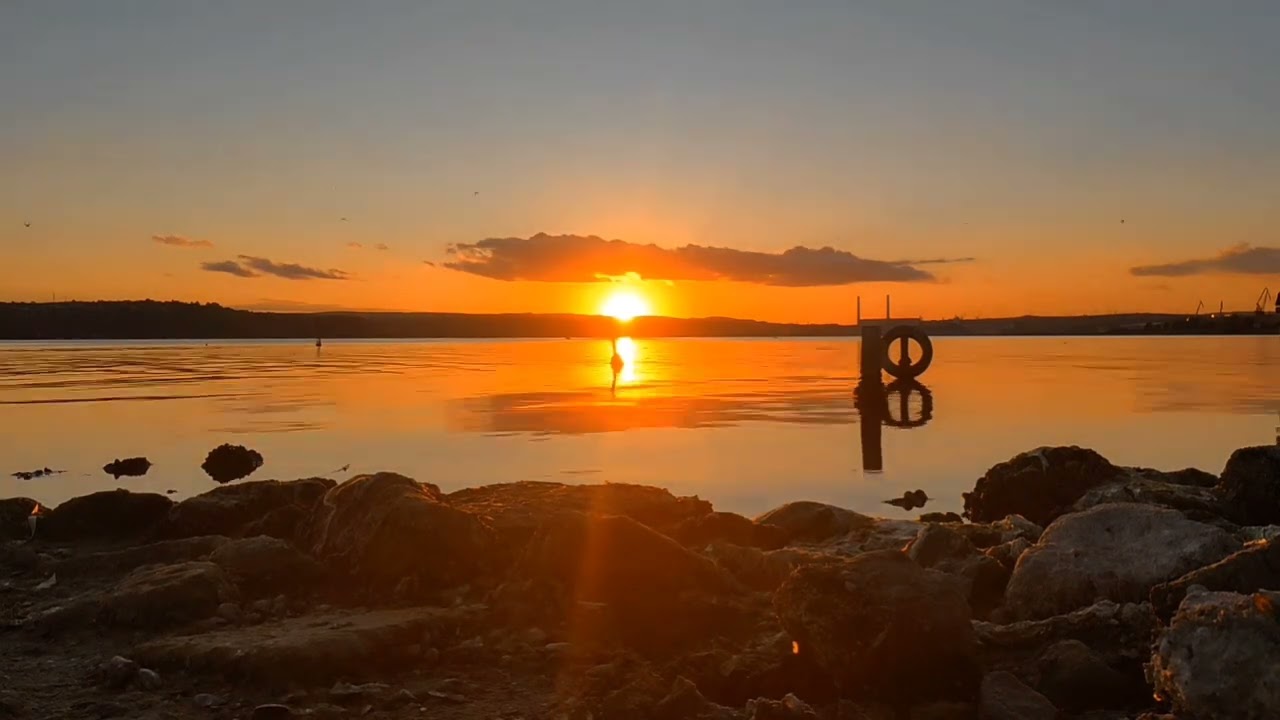
To the south the village borders Lake Varna. To the east lies the Kazashko Protected Site on the shore, part of the European Natura 2000 network. There is a rich deposit of healing mud in the lake near the village, and sunsets over the water are a favourite subject of local photographers.
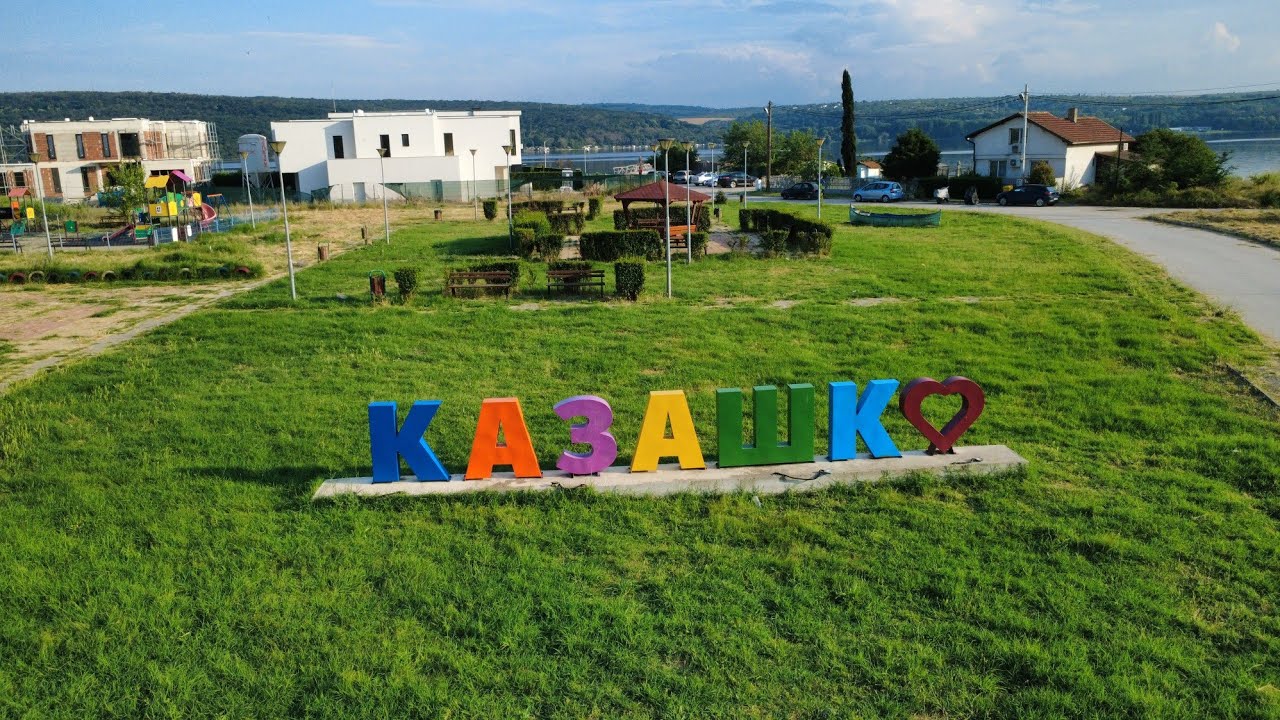
168,000m² is the area of the village
~2.6 km²is the village’s land
1 mabove sea level, right on the shore
Still from the video “Kazashko by drone: the pier, the park and the shore”

From above

Kazashko from above

01 / 07

Kazashko by drone: the pier, the park and the shore

Video: Krasko ↗ · 4:16

Kazashko in the media

What they say about the village

26 reports, articles and programmes from 19 outlets, from 2010 to 2026. Tap a clipping to read the summary.

Pateshestvia.net Near Varna – 7 Places to Surprise You in Bulgaria Travelogue BNR Kazashko marks 120 years since its founding with a colourful festive programme Radio report Petel.bg The Cossack village celebrates its 120th anniversary News Ti i Lidl A film presents the colour of the Cossack community Documentary film Standart Refugees from the Russian Empire founded Kazashko Article BNT “Under One Sky”: the village of Kazashko, the smallest settlement in Varna Municipality TV programme Blitz.bg Gergana Petkova – an extraordinary woman Interview YouTube Visiting the Cossacks in the village of Kazashko Video report BNR Visiting the Cossacks in the Old Believer village of Kazashko Radio report bTV “Lost in Time”: the Russian village in Bulgaria TV report Fakti.bg A village near Varna speaks Russian and keeps Cossack traditions Article BNT The village of Kazashko keeps the customs and culture of the Nekrasov Cossack Old… TV programme TV Cherno More Kazashko – the pearl of Lake Varna TV programme Cross.bg The Varna village of Kazashko keeps the spirit and traditions of the Cossacks Article BratBg A mayor and ataman runs the Old Believer village of Kazashko with heart and soul Article Provaton.bg The esaul of the Varna village of Kazashko Article Dnes.bg An esaul guards the heritage of the Don Cossacks near Varna Article Trud Kazashko celebrates 110 years Report BNR The village of Kazashko celebrates an anniversary Radio report BNT Kazashko village TV programme BNT The Cossacks – one of the minority groups in Bulgaria TV programme Trud Kazashko celebrates Sailors’ and Fishermen’s Day Report BG On Air Kazashko – the village where old Russia lives on TV report Trud The village of Kazashko is like a magnet for Russians and Westerners Article Kinodokument Studio (Russia) “Odna dusha” (“One Soul”): a documentary film about Kazashko Documentary film Moreto.net A mayor and ataman is in command in the Varna village of Kazashko Article

Articles

Read more

In-depth articles on the history, faith, nature and festivals of Kazashko.

Map and visit

How to get here

Tap a point · drag · the scroll wheel zooms after a click © OpenStreetMap

By bus

City bus line 18A from Varna railway station. Intercity line 14 Varna – Devnya also passes the village.

By train

Passenger trains stop at Topolite station, right next to the village.

By boat

Bon Marin marina is on the lake shore, west of Kazashko.

Questions

Frequently asked questions

Where is the village of Kazashko?

On the northern shore of Lake Varna, about 6 km west of the centre of Varna. Administratively, it is part of Varna Municipality.

Why is Kazashko called that?

The village was founded in 1905 by descendants of the Nekrasov Cossacks, Russian Old Believers. Its first official name, in 1908, was “Kazashka mahala” (“Cossack Quarter”), and since 1952 it has been called Kazashko.

What language is spoken in Kazashko?

Bulgarian and Russian. Older people from the Old Believer families keep a southern Russian dialect with roots in the 18th century.

What are Kazashko’s festivals?

Sailors’ and Fishermen’s Day in mid-August, and the church’s feast day, the Feast of the Holy Protection (Pokrov), which is also Cossack Day, on 14 October.

How do I get to Kazashko?

By city bus 18A from Varna railway station, by train to Topolite station or by car on the Varna – Devnya road.